
The moments immediately following a motor vehicle collision are almost always marked by chaos, confusion, and a rush of adrenaline. Whether it was a minor fender-bender at a busy intersection or a severe multi-vehicle crash on the highway, your body is instantly flooded with stress hormones that can easily cloud your judgment. In this high-stress state, it is natural to focus entirely on checking for immediate bleeding, looking at the dented metal of your vehicle, or trying to clear the roadway. However, it is vital to recognize that the decisions you make, the words you speak, and the steps you take during the first few hours and days after a crash carry massive, permanent legal and financial weight.
Many well-meaning drivers fall into common traps during this critical window. Because adrenaline masks physical pain, individuals frequently tell onlookers, the other driver, or responding police officers that they are completely unhurt, only to wake up forty-eight hours later in excruciating pain. Others mistakenly believe that handling the situation informally without involving law enforcement or legal professionals will save them time and stress. Unfortunately, insurance companies are well aware of these missteps and actively look for them. A casual statement made at the scene or a delay in seeking medical evaluation can be used to deny a valid claim entirely.
Immediate Legal Protections at the Scene

Your primary focus in the minutes following a crash must be safety, followed immediately by legal self-defense. The very first step is to fulfill your statutory obligations under state law, which universally require drivers involved in an accident resulting in injury or significant property damage to remain at the scene and alert the authorities.
-
Secure the Environment: Carefully pull your vehicle to the shoulder or a safe area if it is obstructing traffic and turn on your hazard lights. If the vehicle cannot be moved, safely exit when traffic permits and stand in a secure location away from the roadway.
-
Notify Law Enforcement: Call 911 immediately. Even if the other driver begs you not to involve the police, an official law enforcement presence ensures that an objective third party documents the scene, takes official statements, and creates a formal record that will be vital for your case later.
-
Exchange Vital Details: Approach the other driver calmly to exchange information. You are legally required to collect their full name, contact details, driver’s license number, vehicle license plate, and specific auto insurance policy information.
While exchanging this information, you must adhere to a strict rule of liability preservation: do not apologize, do not explain what you think happened, and do not make casual assessments of your physical state. Phrases as simple as “I’m sorry, I didn’t see you,” or “Don’t worry about it, I’m fine,” are routinely documented by the other party and handed over to an auto accident attorney who will represent the opposing side. These statements are easily framed as an admission of fault or proof that you suffered no injuries during the impact.
Additionally, look around for any independent witnesses who may have pulled over or stopped on the sidewalk. Bystanders have no financial stake in the outcome of the case, making their testimony incredibly valuable. Politely ask for their names, phone numbers, and a brief description of what they saw before they walk away. Gathering this independent proof early provides critical ammunition for a personal injury law office when they begin building a case to demonstrate the other driver’s negligence.
Building the Physical and Visual Case File

Once your immediate safety is secure and the police are on their way, you must transition into an active investigator. The physical evidence at a crash scene degrades rapidly; cars are towed away, weather washes away skid marks, and memories fade. Using your smartphone to build a comprehensive visual record is one of the most powerful actions you can take to protect your legal rights.
-
Capture Comprehensive Photography: Take wide-angle photos of the entire accident scene from multiple directions to establish the layout of the road, the positioning of the vehicles, and traffic signals.
-
Document Specific Vehicle Damage: Zoom in on the precise areas of impact on all involved vehicles, capturing the depth of the dents, paint transfers, and deployed airbags.
-
Record Environmental Factors: Take pictures of skid marks on the pavement, shattered glass, broken car parts, obscured traffic signs, and current weather or lighting conditions that may have contributed to the collision.
-
Obtain the Police Report Information: Before the responding officer leaves, ask for their name, badge number, and the incident report number so you can easily request the official paperwork later.
Managing the physical recovery of your property is another area where meticulous documentation is required. When your vehicle is removed from the scene, keep a detailed log of where it is being stored and collect all itemized bills. It is important to have your car evaluated by trusted professionals who specialize in auto services to uncover hidden structural damage, such as a bent frame or compromised suspension, that might not be visible from a casual exterior glance. Every receipt for towing, storage, and diagnostic inspections should be placed into a dedicated physical or digital folder.
To prevent crucial electronic evidence from disappearing, it is highly beneficial to seek professional counsel as soon as possible. Retaining a local injury attorney within the first few days ensures that formal spoliation letters are drafted and sent to nearby businesses, municipal agencies, or commercial trucking companies. These legal notices demand the preservation of traffic cameras, security footage, or dashcam recordings before they are permanently deleted or overwritten in the ordinary course of business.
Medical Documentation as the Foundation of Your Claim
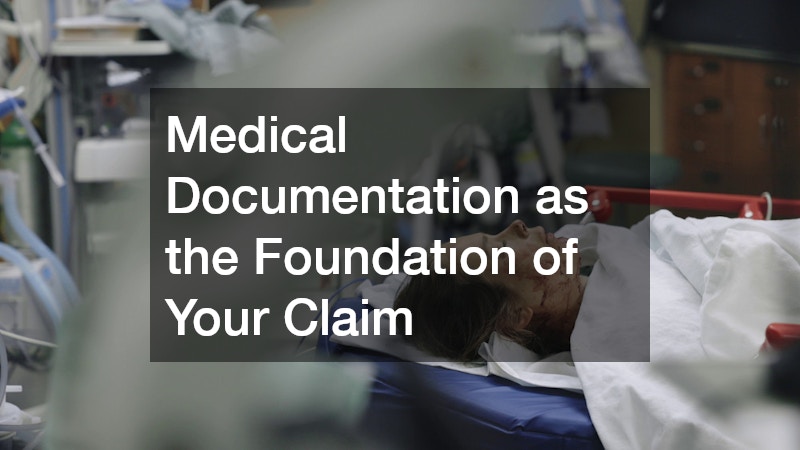
A successful personal injury claim relies entirely on your ability to prove two distinct things: that the other driver caused the crash, and that the crash directly caused your physical injuries. If you fail to seek medical attention immediately after the incident, the defense will argue that your injuries occurred elsewhere or that they were simply not serious enough to warrant compensation. Therefore, visiting an emergency room or an urgent care clinic on the day of the accident is an absolute legal necessity.
-
Establish the Medical Link: A prompt diagnosis creates an official, time-stamped medical record that legally connects your physical symptoms to the force of the collision, neutralizing the defense’s favorite argument that your pain is unrelated to the crash.
-
Identify Delayed Symptoms: Professional medical diagnostics can uncover internal bleeding, soft tissue damage, and minor fractures that your body’s natural shock response might be preventing you from feeling.
-
Follow All Discharge Instructions: Adhering strictly to the prescribed recovery plan demonstrates to the court and the insurance companies that you are actively committed to your healing process.
For many accident victims, the primary source of ongoing pain stems from spinal misalignment, whiplash, and deep soft tissue trauma caused by the sudden back-and-forth whipping motion of the impact. Navigating these specific injuries often requires specialized care outside of a traditional hospital setting. Seeking evaluation and targeted spinal alignments from a car accident chiropractor can be an effective way to document and treat structural damage to the neck and back, providing clear clinical notes regarding your physical limitations.
As your recovery progresses, transitioning into structured rehabilitation is often necessary to regain full mobility. Overcoming torn ligaments, muscle strains, and joint stiffness requires consistent, goal-oriented physical therapy sessions. Every single medical visit, therapy report, and prescription log contributes to a solid wall of evidence. You must avoid the common pitfall of missing appointments or stopping treatment early because you start to feel slightly better. These gaps in treatment give insurance adjusters the perfect excuse to claim that you have fully recovered, leading them to cut off your financial compensation prematurely.
Navigating Complex and Hidden Injuries

While broken bones and lacerations are immediately obvious, some of the most debilitating consequences of a car crash are invisible and slow to develop. Internal bruising, nerve impingement, and severe chronic strain can disrupt your daily life for months or years. Managing these hidden conditions requires specialized diagnostics and long-term, intensive medical intervention to ensure your legal claim accounts for the full scope of your suffering.
-
Address Severe Chronic Discomfort: Underlying nerve damage or deep muscular trauma often requires targeted pain management treatments, including epidural steroid injections or specialized nerve blocks, to allow you to perform basic daily activities.
-
Recognize Cognitive Disturbances: Watch closely for subtle signs of neurological harm, such as chronic headaches, dizziness, sensitivity to light, unexplained mood swings, or difficulty concentrating.
-
Quantify Non-Economic Damages: Keep a daily symptom journal documenting how your physical and cognitive limitations impact your ability to work, sleep, and interact with your family.
One of the most serious long-term risks of a violent collision is a traumatic brain injury. A sudden impact can cause the brain to collide with the inside of the skull, resulting in concussions or deeper axonal shearing. If you or a loved one experiences persistent cognitive changes after a crash, enrolling in a dedicated brain injury rehab program is essential. This specialized environment provides the speech, occupational, and cognitive therapies required to retrain the brain while producing the rigorous neurological documentation needed to prove the severity of your injury in a court of law.
When negotiating a settlement, you must never base your financial demands solely on the medical bills you have accumulated up to that point. A comprehensive claim must project all future medical expenses, including potential surgeries, ongoing medications, and lifelong therapeutic support. By working closely with medical experts and lifecare planners, your legal team can accurately calculate these long-term costs, protecting you from settling your claim for a quick payout that leaves you personally responsible for massive medical bills down the road.
Dealing with Insurance Adjusters Without Compromising Your Case
Navigating the insurance claim process can feel like walking through a legal minefield. It is critical to understand that insurance adjusters, regardless of how friendly and empathetic they sound over the phone, are corporate employees whose primary goal is to minimize the amount of money their company pays out.
-
Notify Your Own Insurance Provider: You are contractually obligated to inform your own insurance company about the accident within a specific timeframe, usually a few days, to open a claim and protect your access to first-party coverages like MedPay or Uninsured Motorist protection.
-
Stick strictly to the Basic Facts: When reporting the incident, provide only the date, time, location, and the names of the involved parties. Refuse to discuss fault, road conditions, or your medical status until you have consulted a lawyer.
-
Say No to Early Settlement Offers: Reject any immediate cash offers made within the first few weeks of the crash. These lowball settlements always require you to sign a release liability waiver, which permanently strips away your right to demand more money if your injuries turn out to be worse than initially thought.
During the initial phase of your claim, adjusters from the opposing party’s insurance agencies will likely call you repeatedly, asking to record your conversation or requesting that you sign a broad, blanket medical authorization form. You should politely but firmly decline these requests. A recorded statement gives them an opportunity to twist your words or trap you into contradictions, while a blanket medical release allows them to dig through your entire medical history from years prior to the accident, looking for old injuries they can blame for your current pain.
To cover your mounting medical expenses while liability is being disputed, you may need to rely on your private health insurance. In this scenario, your medical providers can coordinate with your health insurance provider, utilizing them as an effective health solutions partner to manage immediate billing costs. Keep in mind that if you eventually receive a settlement from the at-fault driver’s insurance, your health provider may assert a subrogation lien against that settlement to recover the funds they paid out, a complex legal process that requires careful management by an experienced legal advocate.
Navigating the legal aftermath of a car accident is a marathon that requires patience, meticulous organization, and strategic caution. Every single choice you make—from the words you utter to the responding officer at the scene, to the consistency with which you attend your rehabilitation appointments—directly shapes the outcome of your eventual personal injury claim. By viewing your medical recovery and your legal case as interconnected pieces of the same puzzle, you protect yourself from the predatory tactics of aggressive insurance corporations looking to safeguard their corporate profits.